Admissions are open for academic year 2026-27 for Play school.

Jr. KG

Jr.KG children are confident in spirit, infinite in resources, and very eager to learn and explore. For children this age, everything is possible
Our Jr. KG program recognizes that children will soon be entering grade-school; hence it is vital that we equip them with the resources needed to succeed in school. Our program is based on the IB PYP and the belief that children are competent learners who are eager to explore the world around them. The program runs for about 4 hours everyday wherein educators work collaboratively with children to implement a program that meets curricular outcomes while engaging children in their interests and talents.

Day in the Life

Start of the day
  • Welcome and Inquiry Time

    During circle time, children and teachers discuss the different stations that have been set up, indulge in mindfulness exercises, and share personal stories. After circle time, children immerse in inquiry time which is set out for exploration of a project within a unit.

  • Choice Time

    Choice time is an opportunity for children to direct their own learning. The educator carefully sets up centers with materials that provoke investigations but it is the child who discovers ways of using the materials.

  • Math and Literacy Time

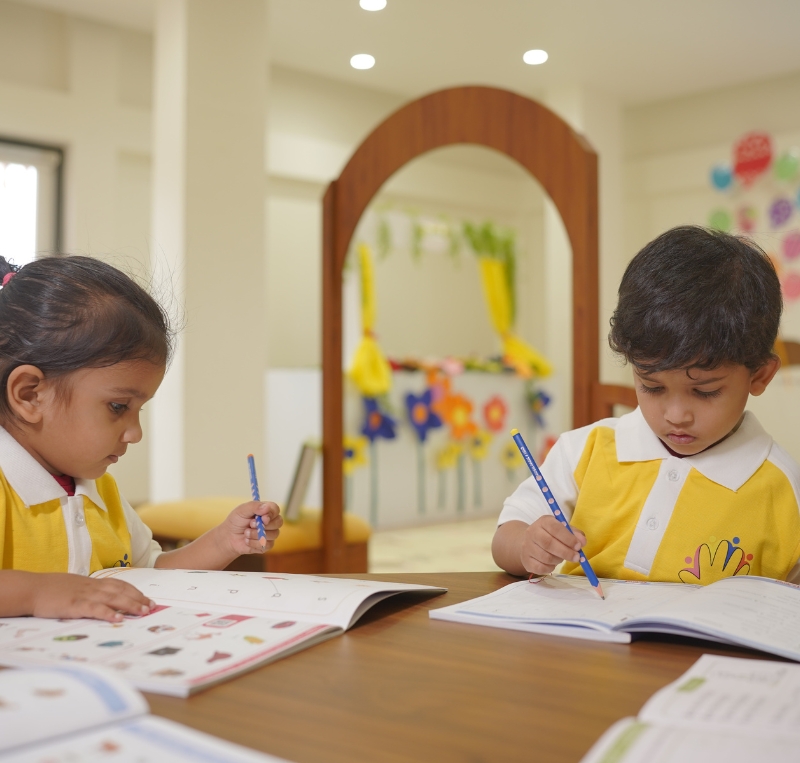
    Math and Literacy Time is designed for focused skill building that ensures children are prepared for Grade School.

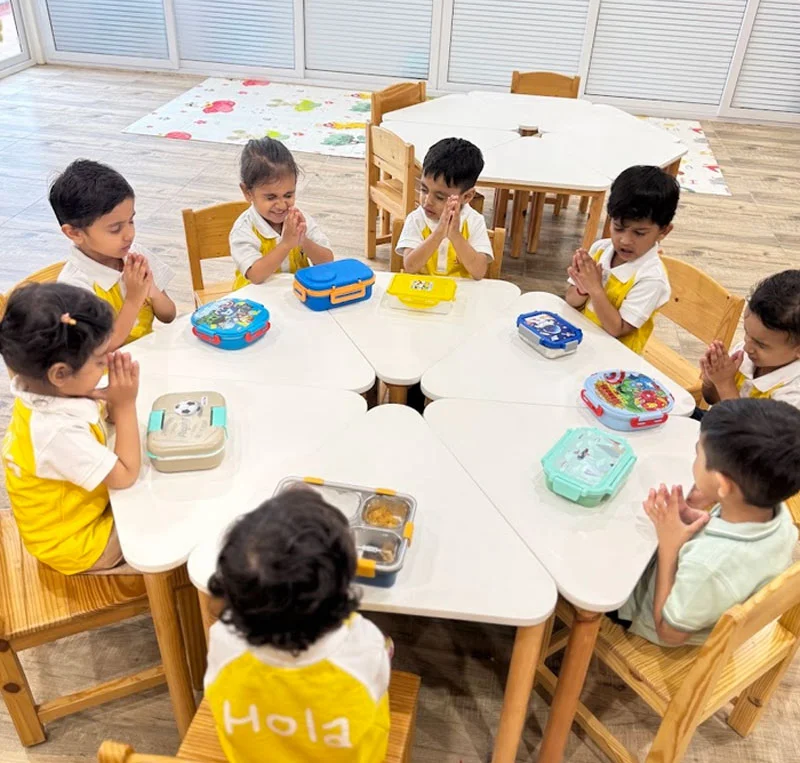
  • Snack Time

    Snack time is an opportunity for educators to model healthy food habits and discuss different types of foods being eaten in the class.

  • Sensory or Outdoor Play

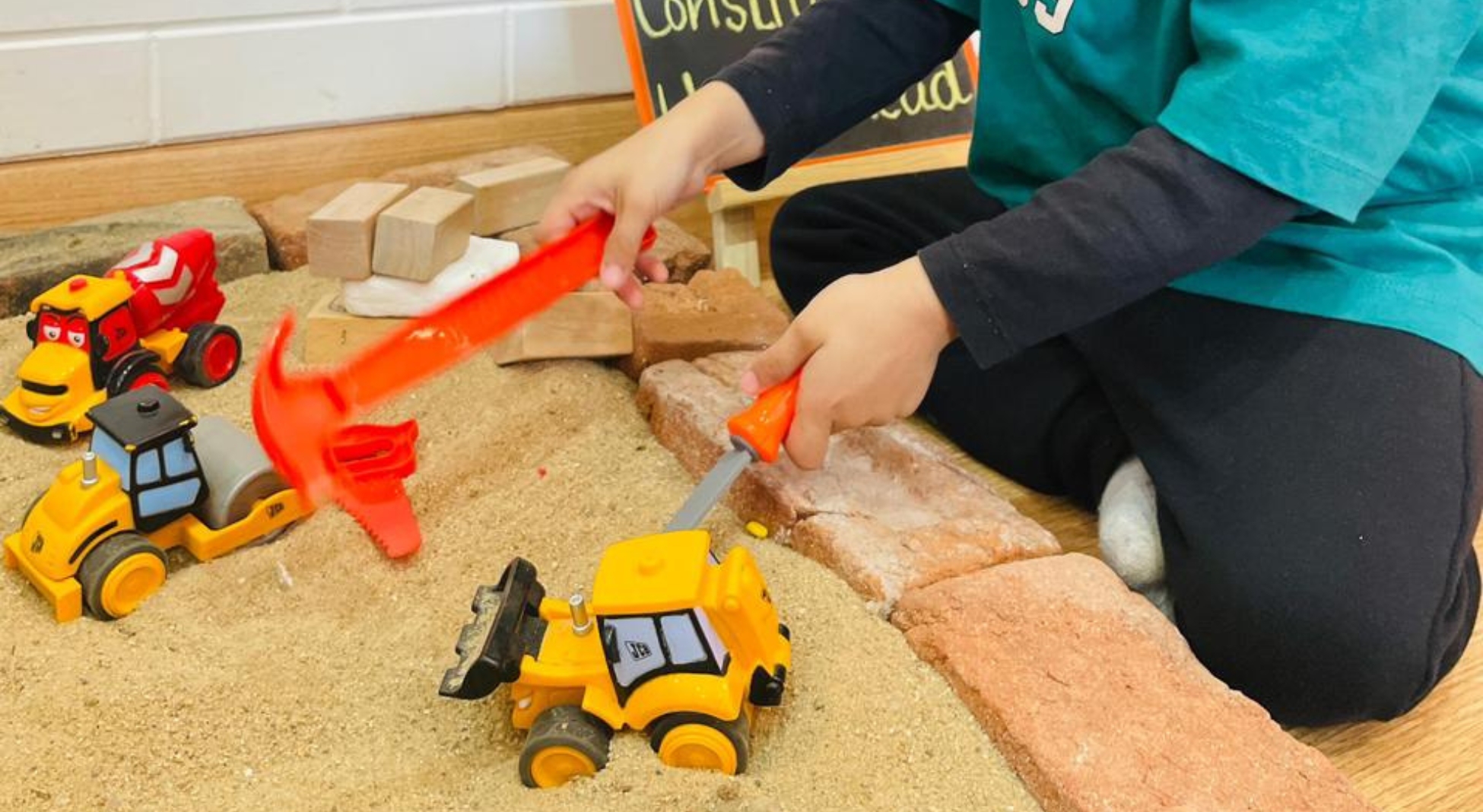
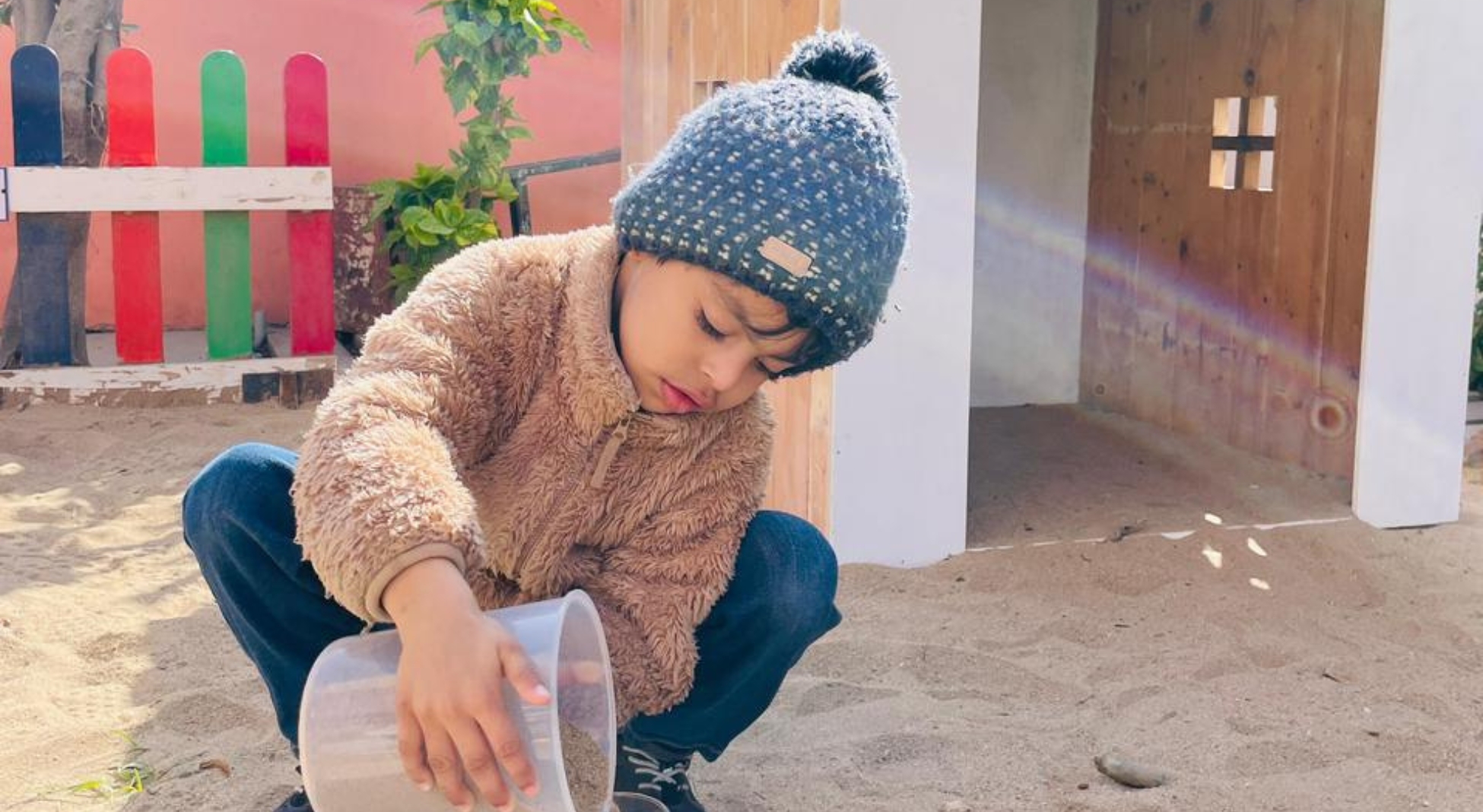
    Everyday, children spend about 45 minutes in the sensory gym or in one of the outdoor play areas. Activities include obstacles courses, ziplining, tumbling, cycling, group games, soccer, sand play and water play.

  • Reflection Time

    After an exhausting and eventful day, children and educators gather to recollect their energy and experiences. Closing circle time is an opportunity to discuss the activities of the day, choice time explorations, or participate in storytelling.
The Bell Goes Off

Jr. KG Learning Spaces

Sensory Gym

The sensory gymnasium is every child’s favourite space at Hola kids. It is filled with open-ended and structured challenges that change every week. Children strengthen physical skills and social skills as they walk on balancing beams, wobble on river stone gonges, fall on crash mats, climb on rock walls, jump under parachutes, ride scooters, swing on ziplines, and hang on wallbarz.

Outdoor Play Spaces

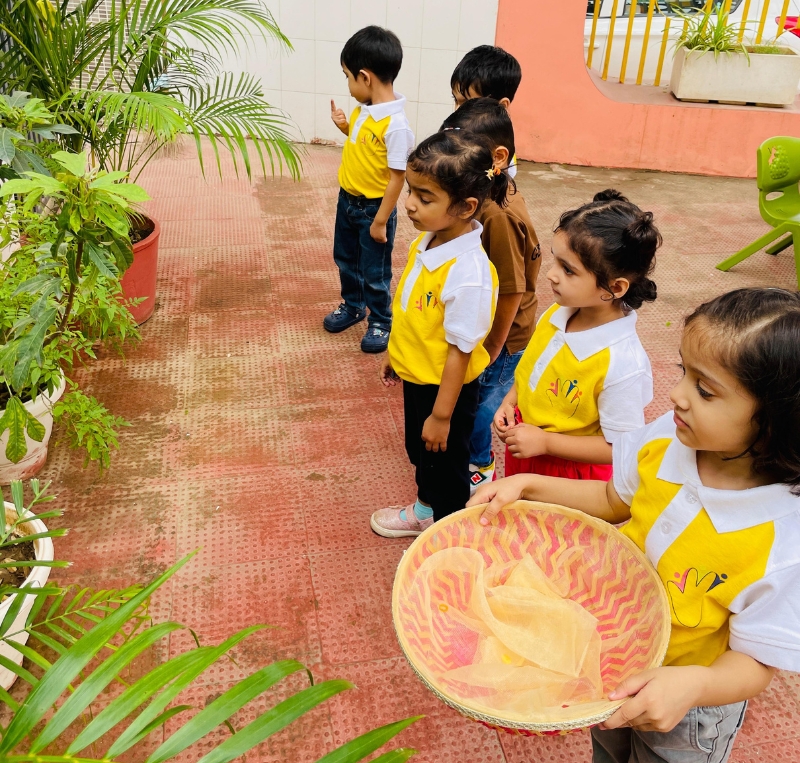
Hola kids is equipped with 3 types of outdoor spaces – active, social, and experimental. In the active play area, children have access to open-ended play equipment where they develop their gross-motor skills through playing football, cycling, crawling and climbing on mounds. The outdoor social area is an interactive and collaborative space with a sand pit, water tub, and a pretend play area. In the experimental outdoor area, children experiment with materials that evoke their multiple senses.

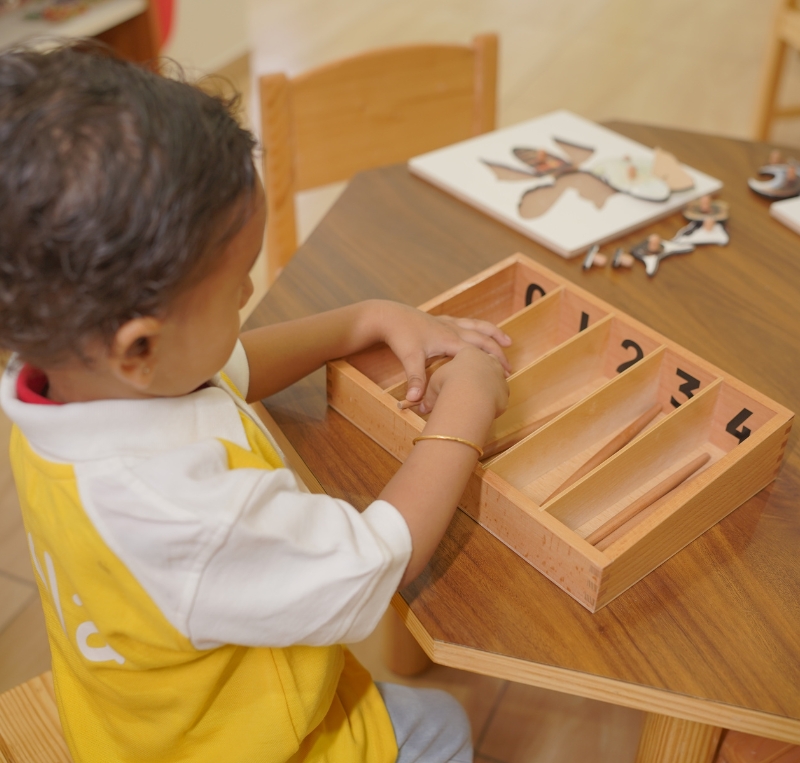
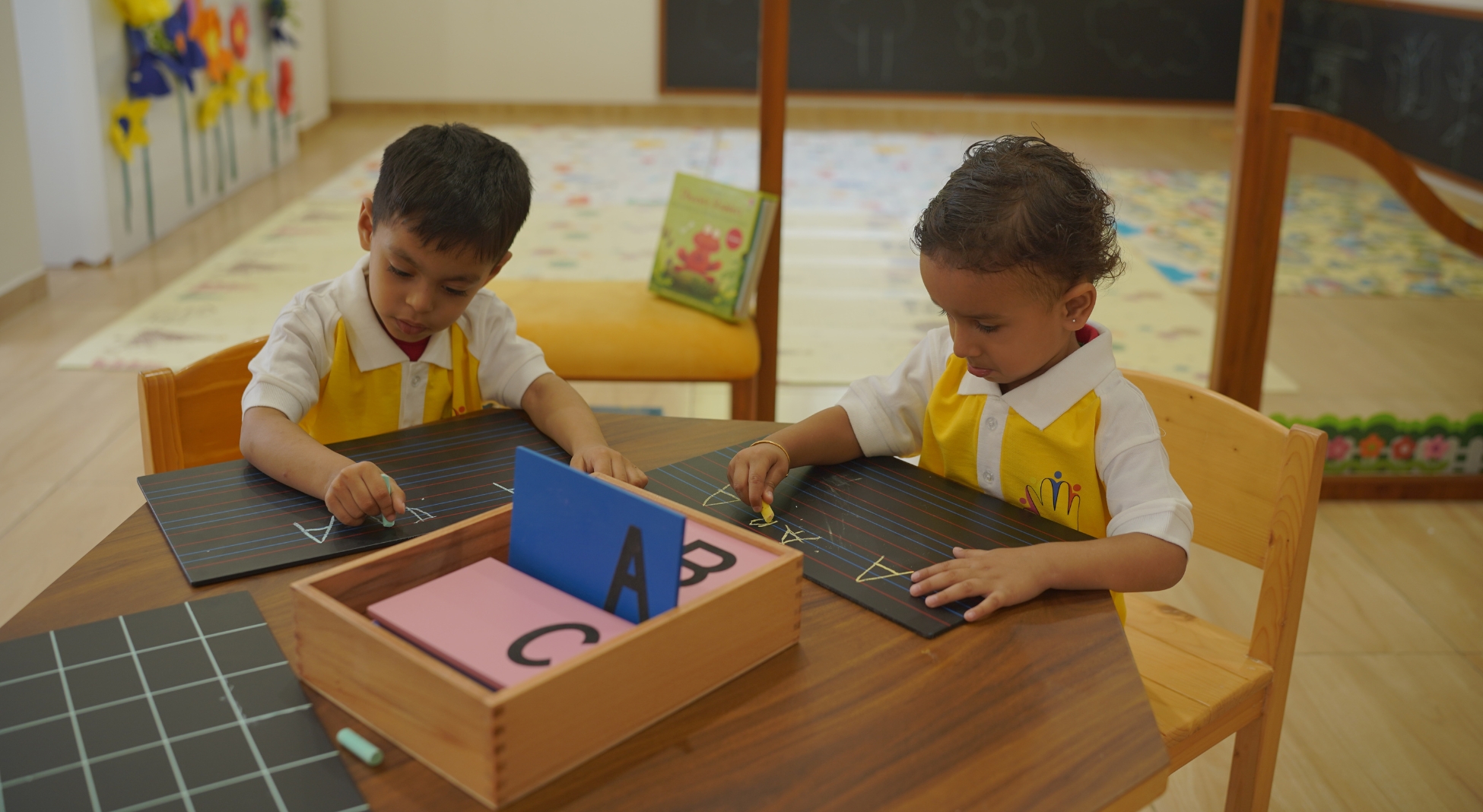
Numeracy and literacy station

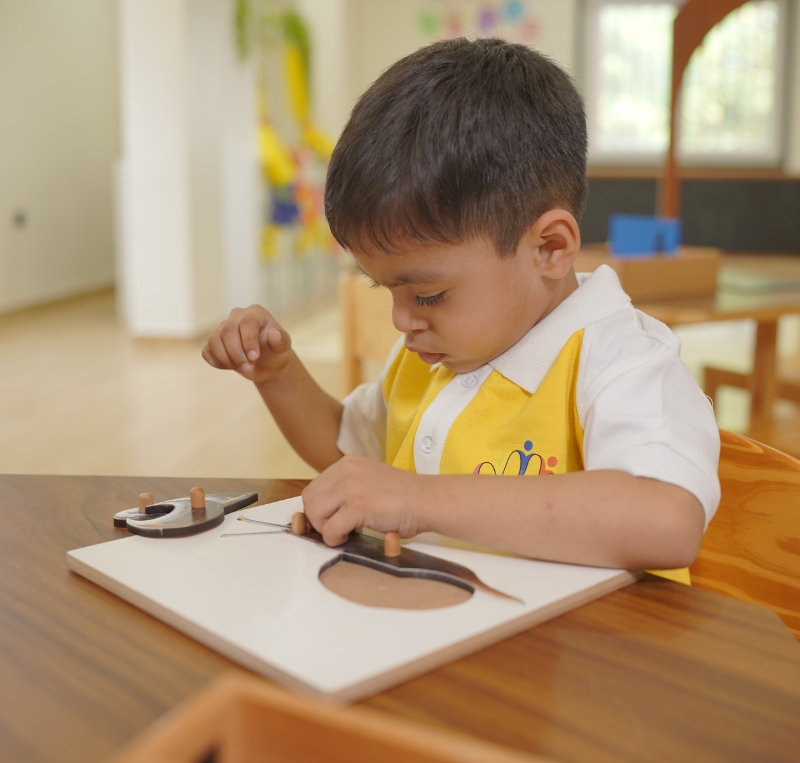
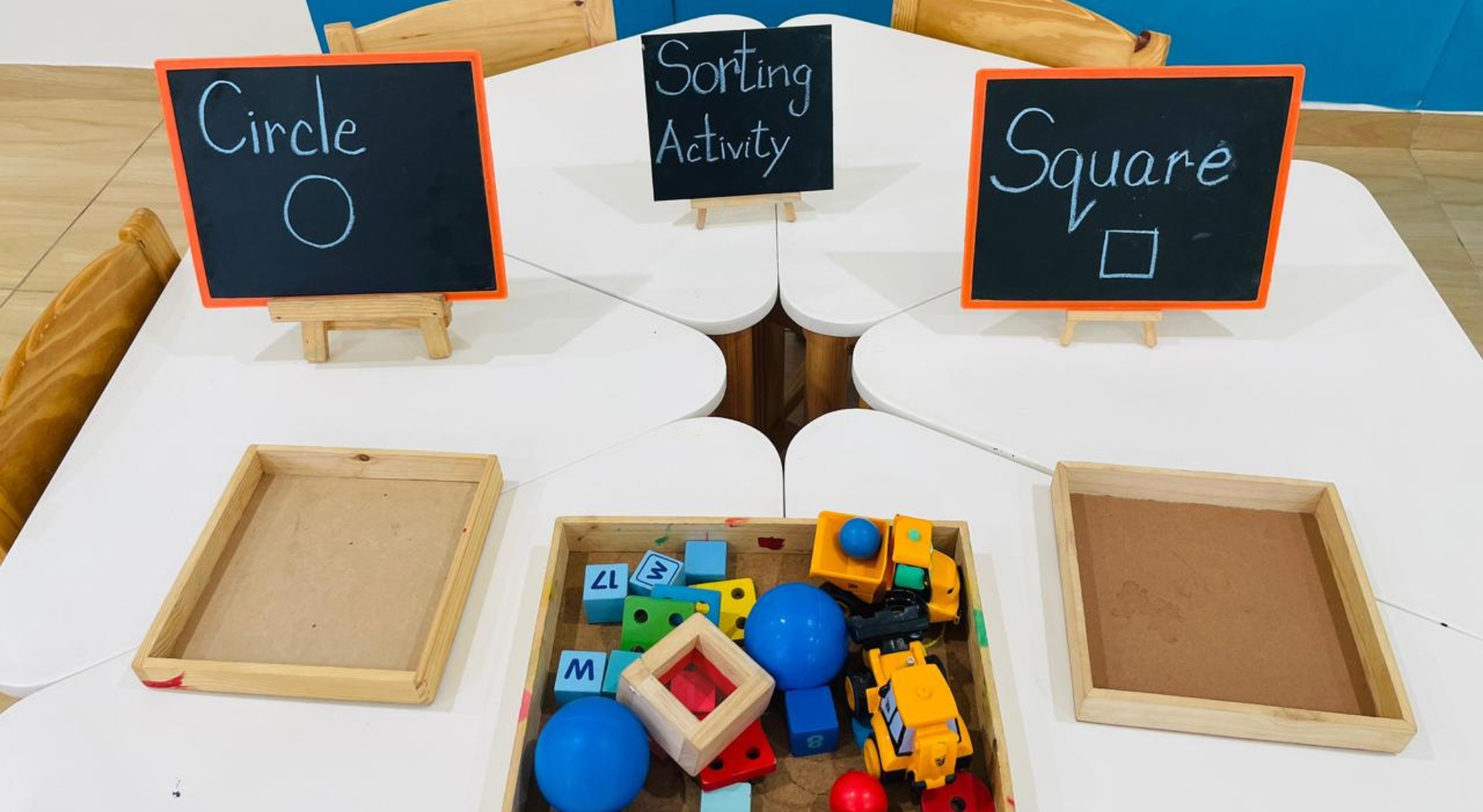
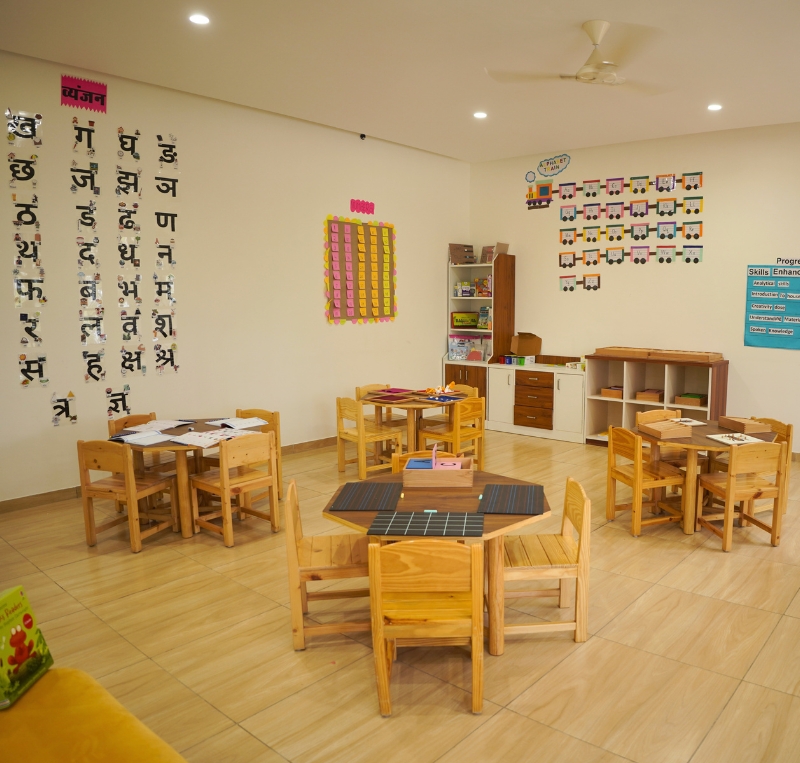
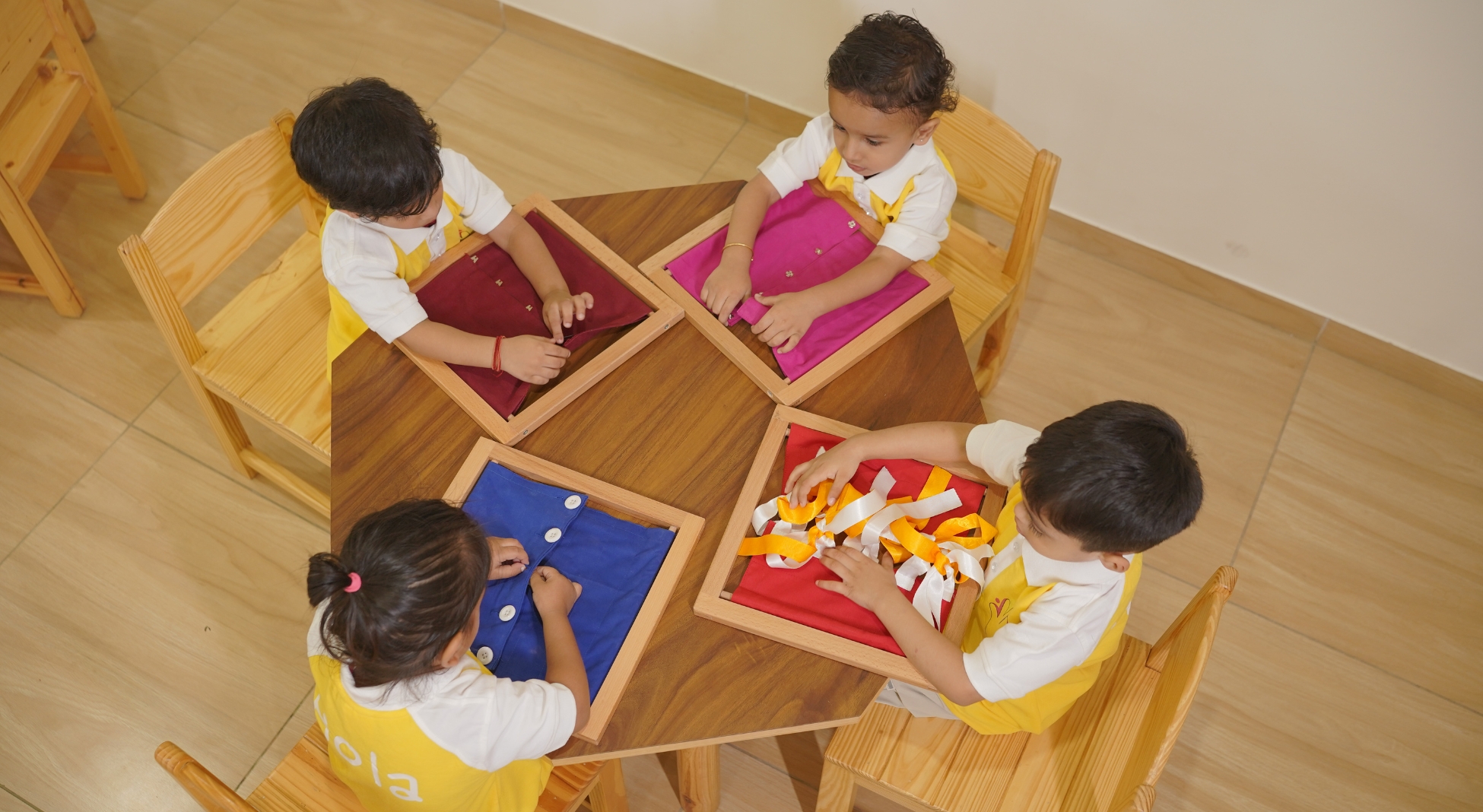
We believe that building a strong literacy and numeracy foundation provides young children with a headstart into a world that is based on communicating through words and numbers. Children spend an hour in this area everyday on focussed numeracy and literacy inquiry and projects. This station plays host to learning manipulatives that are inspired by Montessori and Reggio Emilia.

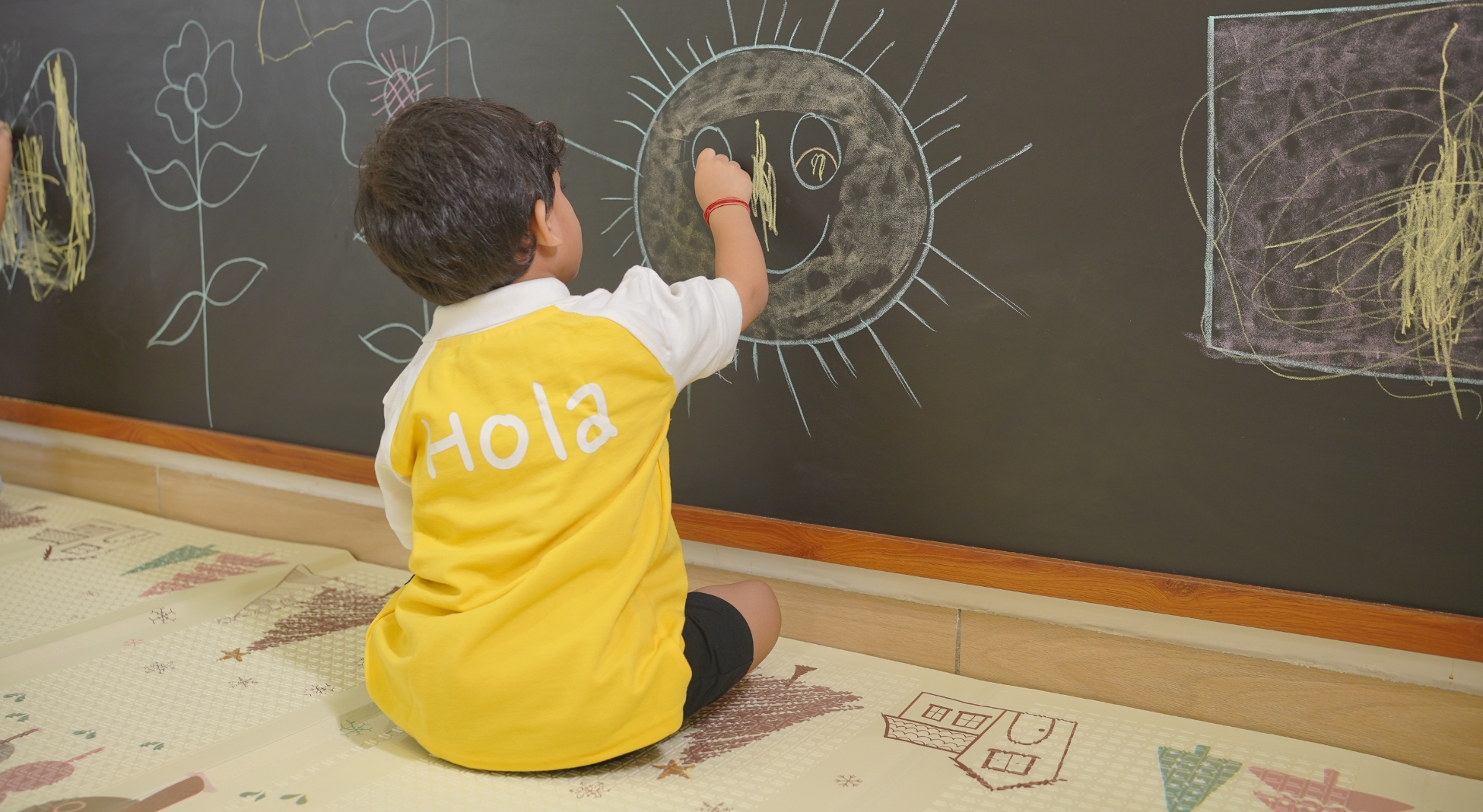
Art and Design Station

The art and design station has easels, tables, and mirror tables for children to express themselves through art explorations. They can sketch, paint, sculpt, create illustrations, make cartoons, and create textures. Learning to create and appreciate art and design is important for children to understand different languages of communication. Children are invited to reuse recyclable materials such as cotton balls and bottle caps to create beautiful stuff masterpiece.

Reading Station

The reading station is a cozy nook filled with pillows, plush characters, and couches. Storybooks of all genres including science, numeracy, social world, imagination, and emotional intelligence are hosted in this center. Children engage in reading individually or in pairs, listening to read-alouds and performing plays with peers. The reading station also acts as a reef of calm where children can escape the hustle and bustle of the classroom. The reading station is a place where Storybooks of all genres including science, numeracy, social world, imagination, and emotional intelligence are available.. Children engage in reading individually or in pairs, listening to read-alouds and performing plays with peers.

Block Station

The block station is every child’s favourite harbour in the classroom. It has a range of blocks in different shapes, sizes, and characteristics from wooden unit blocks to magnetic blocks. This station hosts collaborative construction of elaborate structures that sometimes transform into sites for dramatic play. Children immerse in problem solving as they make complex structures and build language skills as they talk about the details of their structure with the entire class during reflection time.

Pretend Play Station

The pretend play station is designed in a way that Jr.KG children can transform it into different sites of interest such as restaurants, hospitals, pet stores, barber stores, bakeries, beaches, and campsites. Children have access to a range of props and costumes that can be used in many imaginative ways. Children learn to care for these by creating agreements about where different materials will be placed during the school year.

Cognitive & Critical Thinking Skills

  • STEM Play : Build curiosity and critical thinking with hands-on STEM exploration.
  • Loose Part Play : Encourage creativity and exploration with open-ended loose parts.
  • Food Exploration : Explore flavors, textures, and creativity through hands-on cooking experiences.
  • Field Trip : Explore, learn, and discover the world beyond the classroom.

Creative Expression & Imagination

  • Pretend Play : Spark imagination and creativity through engaging pretend play scenarios.
  • Art & Craft : Unleash creativity & self-expression through hands-on art and craft.
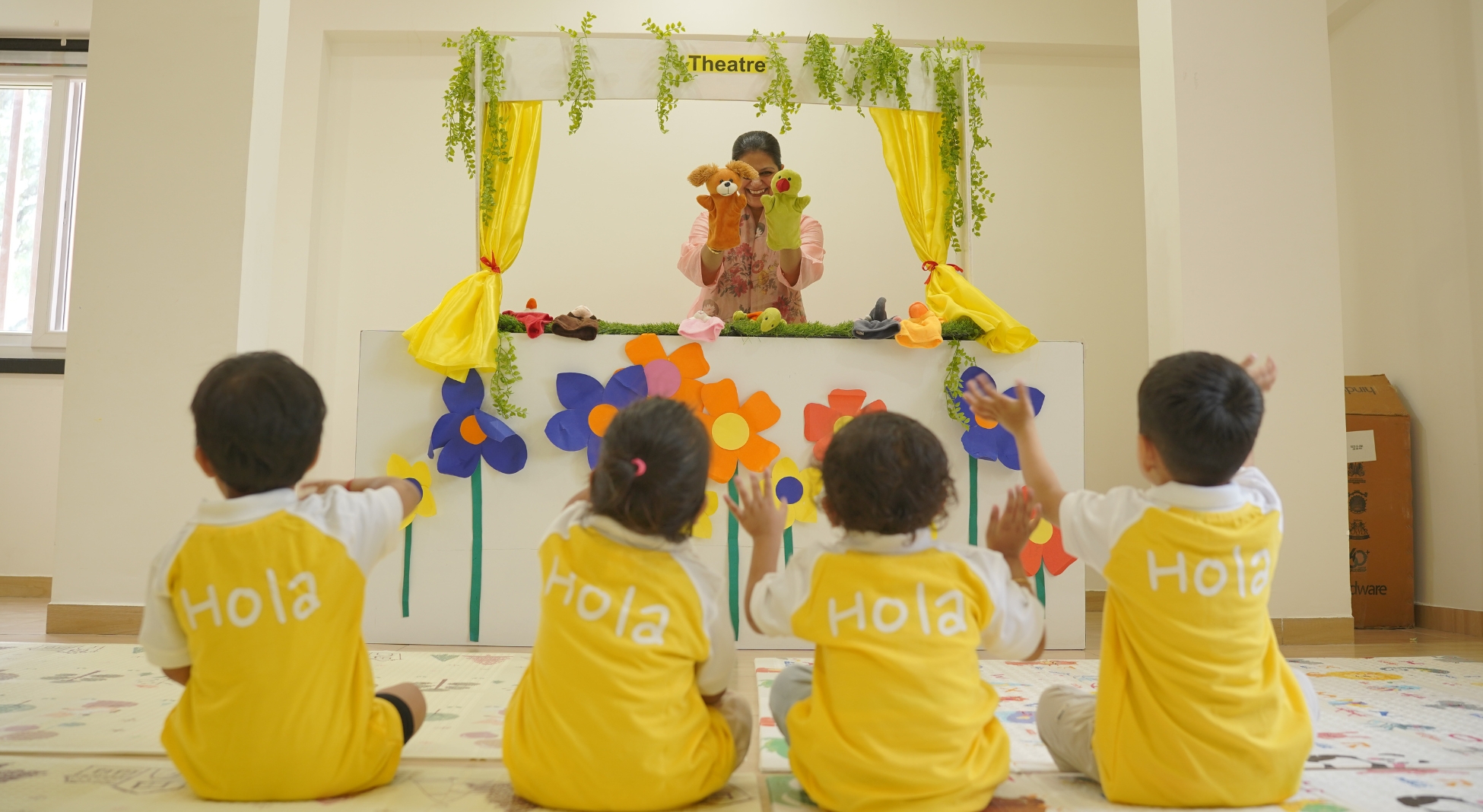
  • Story Narration : Bring stories to life and inspire a love for language and imagination.
  • Music & Movement : Feel the rhythm and express joy through music & dynamic movement.

Social & Communication Skills

  • Stage & Mic Activities : Boost confidence & communication skills through fun stage performances.
  • Pretend Play (Also supports this area) : Encourages role-play and social interaction.
  • Story Narration (Also supports language development) : Develops vocabulary, expression, and public speaking.

Physical & Emotional Well-being

  • Outdoor Play : Connect with nature and enhanced learning through outdoor exploration.
  • Sensory Play : Stimulate senses and spark curiosity through hands-on exploration.
  • Yoga & Mindfulness : Promote calm, focus, and well-being through yoga and mindfulness practices.
  • Music & Movement (Also supports physical development) : Improves coordination and emotional expression.

We Are Little Discoverers

THE CHILD

Viewed as strong, rich in potential, and driven by the desire to grow. Their curiosity makes them question the world around them.

(My work is to play, my mess is with clay!
Evoke a thought and I will sow. Give me more, and I will grow.)

Environment is Our Co-Teacher

THE ENVIRONMENT

The environment encourages exploration, sparks questions, and invites the search for answers together.

Materials are thoughtfully added to the environment to promote creativity, problem-solving, and inquiry.


Guide Me to Create My Own Learning Path

THE TEACHER

The teacher plays a dual role in the classroom – facilitating and learning alongside children. They nurture curiosity, propose hypotheses, and support problem-solving.

Teachers initiate experiences, build upon them, and help children revisit and reflect.

We Value Parent Participation

THE PARENT

Teachers, parents, and children are seen as collaborators in the learning process. As a child’s first educator, parents play a vital role in their development.

An open exchange of ideas between parents and teachers is essential in creating a positive and meaningful learning environment.